Freeze-dried candy: what it is and healthier ways to try it
We may earn a commission from links on this page, at no extra cost to you. As an Amazon Associate we earn from qualifying purchases. How this works
Our quick picks
| Pick | Best for | Where to buy |
|---|---|---|
| Freeze-dried strawberries | Best swap for fruity candy | Amazon.caAmazon.com |
| Freeze-dried apple or banana slices | Best for lunchboxes | Amazon.caAmazon.com |
| Freeze-dried fruit variety pack | Best for trying a few flavours | Amazon.caAmazon.com |
1. Freeze-dried strawberriesBest swap for fruity candy
- What we like
- Many brands list only strawberries in the ingredients. Light, crunchy and easy to pack.
- Watch out for
- Some bags add sugar or fruit juice concentrate, so read the ingredient list. Still contains the fruit's natural sugar.
The closest match to the crunchy, airy bite of freeze-dried candy, with fruit instead of candy as the starting point.
2. Freeze-dried apple or banana slicesBest for lunchboxes
- What we like
- Thin slices that are easy to portion. Look for a bag whose ingredient list is just the fruit.
- Watch out for
- Not every crunchy fruit chip is freeze-dried. Some are fried or sweetened, so check the label for oil and added sugar.
A simple, shelf-stable snack that works in a lunchbox or a party bowl.
3. Freeze-dried fruit variety packBest for trying a few flavours
- What we like
- Lets kids try several fruits without buying a big bag of each.
- Watch out for
- Small single-serve bags create more packaging waste. Ingredients vary by flavour, so check each one.
Handy if you're not sure which fruit your kids will like, or for handing out at a class party.
If your kids spend any time on TikTok or YouTube, they’ve probably seen freeze-dried candy: gummies and chewy candies that puff up, crack open and turn crunchy. Big candy companies have joined in: Mars sells Skittles POP’d and M&M’s POP’d, and Ferrara has announced freeze-dried SweeTARTS, Lemonheads and Spree (ConfectioneryNews). So there’s a good chance a bag turns up in a Halloween haul or a party loot bag this year. What’s on store shelves can differ between Canada and the US.
This guide explains what freeze-dried candy actually is, what it does and doesn’t change about the candy, and some simple ways to give kids that same crunch with less candy involved.
This is general information, not medical or dental advice.
What freeze-dried candy is
Freeze drying is a way of taking water out of food. Clemson University’s Home & Garden Information Center explains that the food is frozen to between -30 °F and -50 °F (about -34 °C to -46 °C), then a vacuum pump pulls the air out of the chamber while the trays are gently warmed. That makes the ice turn straight into water vapour without melting first. Clemson says the process removes up to 98 percent of the water in the food (Clemson HGIC). Utah State University Extension describes the same principle, called sublimation: ice is removed from frozen food as water vapour (USU Extension).
With fruit, that’s how you get light, crisp strawberry slices. Candy makers use freeze drying to change the texture of their candy: the trade press describes the result as light, airy and crispy, and chewy candies are often sold puffed up and cracked open.
Does freeze drying make candy healthier?
No. Freeze drying removes water. It doesn’t remove sugar. A freeze-dried gummy still has the same sugar, colours and other ingredients as the candy it was made from, just with a different texture.
A few things to keep in mind:
- Read the serving size. Puffed pieces look bigger, so a serving on the label may be fewer pieces than you’d expect, or a whole small bag may count as one serving. Our guide on how to read a candy label walks through serving sizes and added sugar on US and Canadian labels.
- It still counts toward added sugar. The American Academy of Pediatrics recommends that children 2 and older have less than 25 grams (about 6 teaspoons) of added sugar a day, and that children under 2 avoid foods and drinks with added sugar (HealthyChildren.org). Our guide on how much sugar kids should have explains more.
- “Freeze-dried” isn’t a health claim. The phrase describes how the candy was made, not what’s in it. Treat freeze-dried candy as candy.
Teeth: crunchy isn’t the same as harmless
Freeze-dried candy is less sticky than the chewy candy it started as, but the sugar is still there. The American Dental Association’s MouthHealthy site gives advice that applies to any candy (MouthHealthy):
- Eat candy with meals or right after. You benefit from the extra saliva your mouth makes during a meal.
- Avoid all-day snacking. The ADA says frequent snacking raises cavity risk, especially with sugary treats.
- Watch out for sour candy. The ADA calls sour candies some of the worst offenders for tooth decay. Some freeze-dried candies come in sour versions, so the same caution applies.
- Sugarless gum after eating. The ADA says chewing sugarless gum for 20 minutes after eating helps prevent tooth decay (for kids old enough to chew gum safely).
Choking risk for young children
The American Academy of Pediatrics lists hard, gooey or sticky candy, along with popcorn and raw apple chunks, among foods to keep from children until 4 years of age or older, depending on each child’s development. It also says children should sit down when they eat and never run, walk, play or lie down with food in their mouths (HealthyChildren.org).
Freeze-dried candy isn’t on that list by name, but it starts as hard or chewy candy, and some pieces are large or have harder centres. For toddlers and preschoolers, it’s sensible to follow the same caution you would with regular hard or chewy candy.
Healthier ways to try the freeze-dried crunch
The fun part of freeze-dried candy is the texture: light, crunchy and a little melty. You can get that from foods that start out a lot healthier than candy.
Try freeze-dried fruit
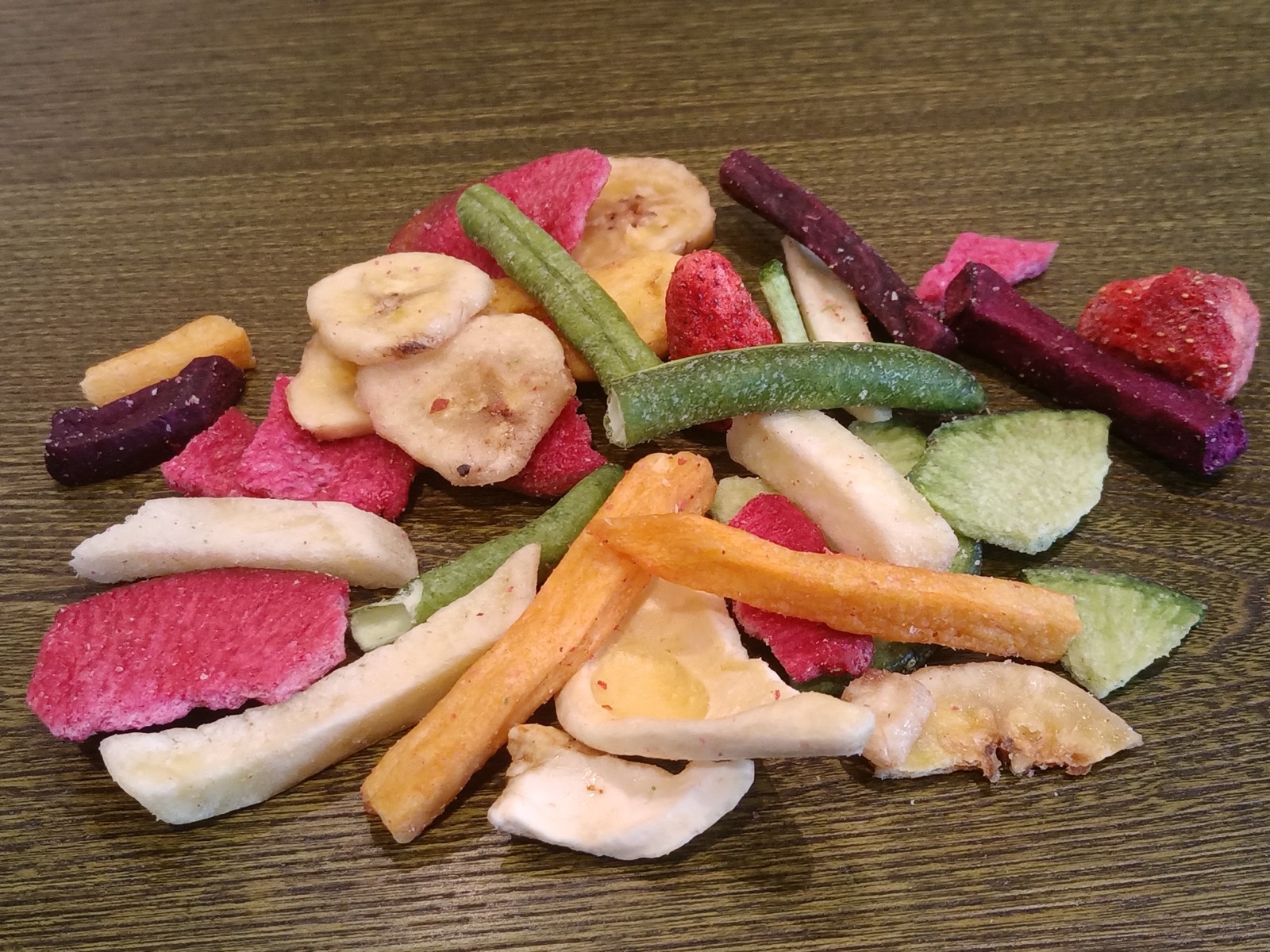
Freeze-dried strawberries, apples, bananas, mangoes and raspberries are sold in grocery stores in both Canada and the US. They have the same airy crunch, and many are made from fruit alone. Two things to check on the bag:
- The ingredient list. Look for one where the fruit is the only ingredient. Some products add sugar or fruit juice concentrate. On US labels, sugar from concentrated fruit juice counts as added sugar (see our candy label guide).
- How it was made. Not every crunchy fruit chip is freeze-dried. Some are fried or sweetened, so check for oil and sugar.
Freeze-dried fruit still has the fruit’s natural sugar, so it’s still a treat for the teeth to think about. Serving it with a meal follows the same ADA advice as above.
Use it as a topping
Crushed freeze-dried fruit adds colour and crunch to plain yogurt, oatmeal or homemade treats. It works well on our dark chocolate fruit bark and frozen yogurt bark. Pieces of freeze-dried strawberry also make colourful decorations on a no-bake graham cracker gingerbread house.
Make freeze-dried candy a small, shared treat
If your kids are curious, buy one bag and share it as a dessert, rather than making it an everyday snack. That turns it into an experience (watching the puffed shapes, comparing them with regular candy) without a lot of extra sugar.
Do you need a home freeze dryer?
Home freeze dryers exist, but they’re a big purchase. Clemson HGIC lists home units at about $2,000 to $10,000 US and notes they cost more to run than other ways of preserving food (Clemson HGIC). For most families, a bag of freeze-dried fruit from the store is the simpler way to try it. A regular oven or dehydrator dries food with heat, which gives a chewier result, as in our strawberry fruit leather.
Got too much candy after Halloween?
If freeze-dried candy and everything else in the treat bag adds up to more than your family needs, see our ideas for leftover Halloween candy. Our yearly candy drive runs November 1 to 15, and you can also find a food bank near you.
Sources
- Clemson Cooperative Extension, Home & Garden Information Center: Freeze Drying Foods
- ConfectioneryNews: Freeze-dried candy craze grows – but not everyone’s winning
- Utah State University Extension: How To… Freeze Dry
- American Academy of Pediatrics, HealthyChildren.org: How to Reduce Added Sugar in Your Child’s Diet
- American Academy of Pediatrics, HealthyChildren.org: Choking Prevention
- American Dental Association, MouthHealthy: Halloween Survival Guide