Holiday teacher gifts kids can make (with and without food)
We may earn a commission from links on this page, at no extra cost to you. As an Amazon Associate we earn from qualifying purchases. How this works
Our quick picks
| Pick | Best for | Where to buy |
|---|---|---|
| Blank cards and envelopes | Best for handmade cards | Amazon.caAmazon.com |
| Small glass jars with lids | Best for jar gifts | Amazon.caAmazon.com |
1. Blank cards and envelopesBest for handmade cards
- What we like
- Folded cards with matching envelopes make a homemade card look finished, and a pack covers teachers, coaches, bus drivers and grandparents.
- Watch out for
- Check the size if you plan to mail any, and pick heavier card stock if kids will paint or glue on them.
The base for the simplest gift on this list. Add crayons, stickers or paint and a few lines of thanks.
2. Small glass jars with lidsBest for jar gifts
- What we like
- Reusable, easy to label and good for dry mixes like hot chocolate, or for a small batch of cookies or apple chips.
- Watch out for
- Glass can break, so let younger kids decorate the label and tag while an adult fills and carries the jar.
A jar with a handwritten label and a ribbon turns a simple homemade treat into a gift.
December is when a lot of families think about a small thank-you for teachers, and the gift that often means the most is one a child made. It doesn’t need to cost much or take long. This guide collects simple ideas kids can make at home, sorted into gifts with no food and gifts with food, plus the allergy and labelling steps that matter if you give something edible.
These are general ideas, not tested products. Every school is different, so if you’re unsure what’s welcome, a quick note to the teacher or the school office is the easiest way to find out.
Why a homemade gift works
Teachers get a lot of mugs, candles and chocolate in December. A gift with a child’s own drawing, handwriting or effort in it stands out, and it’s something kids can do themselves instead of just handing over something a parent bought. It also works for more than the classroom teacher: think of the education assistant, the librarian, the bus driver, the coach and the person at the front desk.
Gifts with no food
Non-food gifts are the safest choice when you don’t know about allergies or dietary needs, and they’re the easiest to share with the whole staff. HealthLinkBC’s school food toolkit suggests non-food ways to celebrate in class, such as making cards and writing notes of kindness (HealthLinkBC). The same ideas work for teacher gifts.
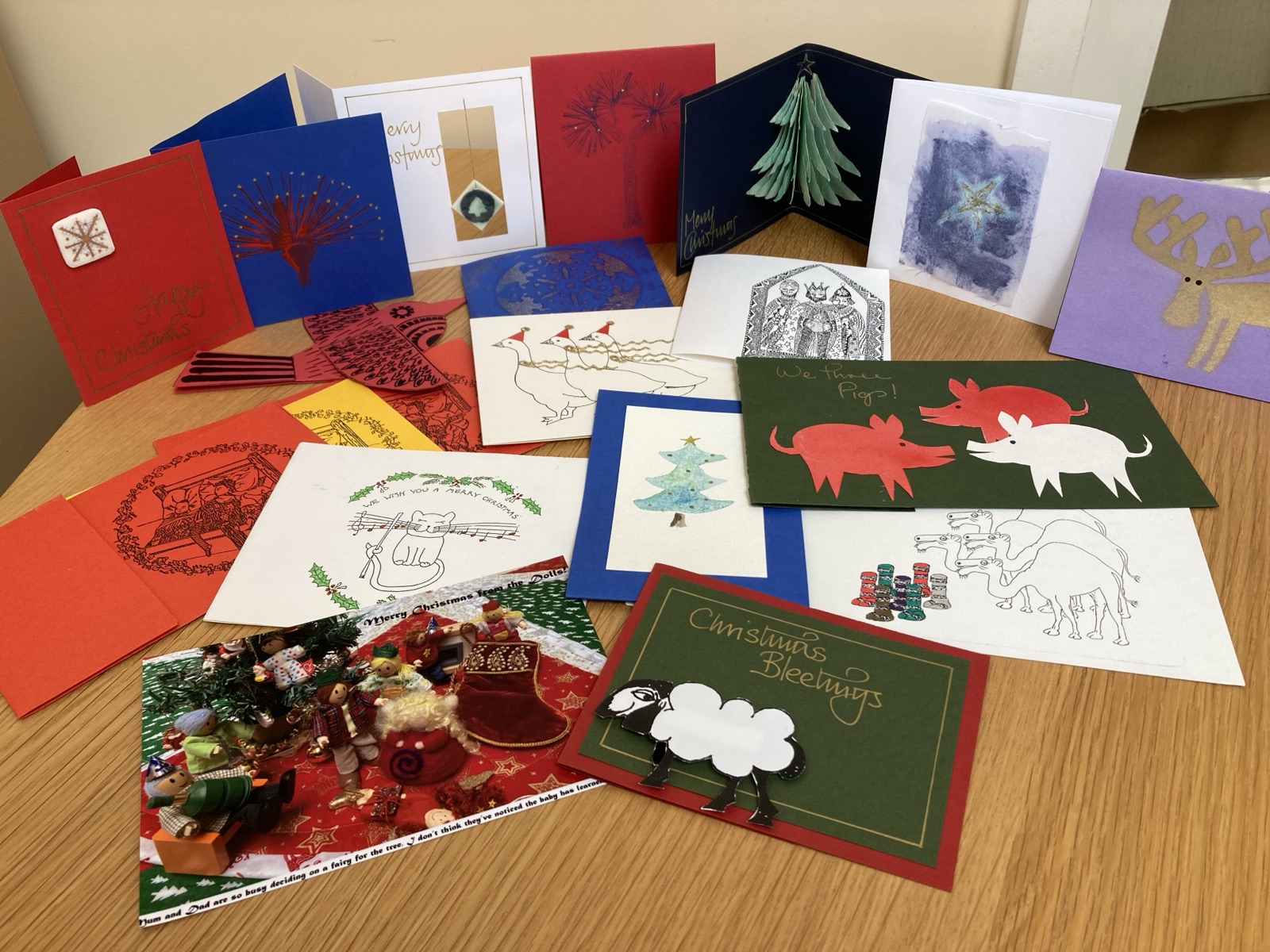
- A handmade card. Fold a piece of card stock, decorate the front, and write a real message inside. Younger kids can draw a picture and an adult can write down what they say about the teacher. Older kids can write it themselves.
- A “what I learned this year” note. Ask your child to finish a few sentences: “My favourite thing we did in class was…”, “You helped me when…”, “I’m getting better at…”. It takes 10 minutes, and these notes are often the ones teachers keep.
- A class thank-you poster. If a few families are organizing together, each child can add a drawing or a sentence to one big sheet of paper.
- A decorated bookmark. Cut a strip of card stock, let your child draw on it and punch a hole for a ribbon. Teachers read a lot.
- A paper ornament or decoration. A paper snowflake, a folded paper star or a drawing for the classroom door. Keep in mind that not every family or teacher celebrates the same holidays, so winter themes work well for anyone.
- A pencil cup. Decorate a clean, empty can with smooth edges or a small jar with paper, stickers or paint. Add a few new pencils if you like.
Use materials that suit your child’s age. Glue guns, craft knives and glass are jobs for an adult or an older child with an adult nearby.
Gifts with food
A homemade treat can be a lovely gift, but food gifts need a little more thought, because you often can’t know who will eat them. Many teachers share edible gifts with family or the staff room.
Easy food gifts from our recipes:
- Less-sugar hot chocolate mix in a jar, with the directions written on the tag.
- Baked cinnamon apple chips, made with just apples and cinnamon.
- Less-sugar shortbread, cut into small shapes and stacked in a jar or tin.
- Strawberry fruit leather, rolled up and tied with string.
Kids can help with a lot of the making. Our guide to holiday baking with kids, age by age suggests jobs for each age. One rule to remember: the FDA says flour is a raw food and advises never eating or tasting uncooked flour, dough or batter (FDA). No licking the spoon, even when the cookies are for someone else.
Ask first, and list every ingredient
Mississippi State University Extension advises checking for food allergies or dietary restrictions before you give food, and labelling gifts with ingredient lists (MSU Extension). Texas A&M AgriLife’s Dinner Tonight program puts it simply: you never know who has a food allergy, so list all the ingredients on a label attached to the gift (Texas A&M AgriLife).
Pay special attention to the major allergens:
- In the US, the FDA lists nine major food allergens: milk, eggs, fish, crustacean shellfish, tree nuts, peanuts, wheat, soybeans and sesame (FDA).
- In Canada, Health Canada’s priority food allergens are eggs, milk, mustard, peanuts, crustaceans and molluscs, fish, sesame seeds, soy, sulphites, tree nuts, and wheat and triticale (Health Canada).
Write those in plain words on the tag (for example, “Contains: wheat, milk”). If you used a store-bought ingredient like chocolate chips, check its package for allergen and “may contain” statements and pass them on. Ingredient lists can change, so read the package you actually bought.
Many classrooms are nut-free. Even if your gift is going to an adult, it may be opened at school, so it’s kind to keep nuts and peanut butter out of teacher gifts unless you know it’s fine. Our guide to nut-free holiday treats for school has more on baking for allergy-aware classrooms.
What to put on the label
Based on the extension advice above, a good gift tag says:
- What it is and the date you made it.
- All the ingredients, with allergens called out.
- How to store it (pantry, fridge or freezer), and when to use it by. Texas A&M suggests marking when it’s good until or whether it can be frozen.
- Directions for any mix, such as how much hot chocolate mix to add to a mug of milk.
A child can decorate the tag and an adult can fill in the details. It’s also a nice place for a short thank-you message.
Keep it fresh and simple
- Choose foods that keep. Dry mixes, crisp cookies and dried fruit travel well in a backpack. MSU Extension recommends storing shelf-stable gifts like cookies in sealed, airtight containers.
- Skip anything that needs the fridge. A gift that sits in a classroom or a car all day shouldn’t be perishable. If you do give something perishable, MSU Extension advises keeping it cool with an insulated bag or cooler.
- Give it close to when it will be eaten. MSU Extension suggests delivering food gifts close to the time they’ll be eaten, so make them a day or two before the last school day, not weeks ahead.
- Keep portions small. Teachers receive a lot of treats in December. A few cookies or one small jar is plenty.
Making it a family project
A teacher gift can be a good weekend project. Some ideas to keep it calm:
- Make a list together. Write down everyone your child wants to thank, then decide on one gift idea that can be made in a batch.
- Set up a station. Cover the table, lay out supplies, and let your child work through the list one card or jar at a time.
- Let it look homemade. Wobbly letters and crooked ribbons are the point. Resist the urge to fix it.
- Write it down. If your child is too young to write, ask them what they want to say and write their exact words. Teachers love hearing it in the child’s voice.
Not every gift has to be a thing
Some families skip gifts and give their time or kindness instead: helping the teacher tidy the classroom on the last day, writing a note to the principal about what the teacher did well, or doing something kind for others in the teacher’s name. If your family wants to help other kids this season, food banks often run holiday drives; each sets its own rules for what it accepts, so call first. Our food bank finder covers the US and Canada.
For more gift ideas, see our non-candy party favours and healthier stocking stuffers, or browse everything in parties and gifts.
Sources
- US Food and Drug Administration: Food allergies
- US Food and Drug Administration: Handling flour safely: what you need to know
- Health Canada: Food allergies
- Mississippi State University Extension: Holiday food gift safety
- Texas A&M AgriLife Extension, Dinner Tonight: DIY homemade food gift tips
- HealthLinkBC: Classroom celebrations and rewards