Nut-free granola bars for school lunches
We may earn a commission from links on this page, at no extra cost to you. As an Amazon Associate we earn from qualifying purchases. How this works
- Makes
- 12 bars
- Prep
- 10 min
- Cook
- 20 to 25 min
- Total
- About 2 hr (including cooling and chilling)
Ingredients
- 2 cups (180 g) old-fashioned rolled oats (labelled gluten-free if needed) Amazon.caAmazon.com
- 1/2 tsp ground cinnamon
- 1/4 tsp salt (skip if your seed butter is salted)
- 1/3 cup (45 g) hulled pumpkin seeds (pepitas) or sunflower seeds Amazon.caAmazon.com
- 1/3 cup (50 g) raisins, chopped dates or mini dark chocolate chips Amazon.caAmazon.com
- 2 tbsp ground flaxseed or chia seeds (optional) Amazon.caAmazon.com
- 1/2 cup (125 ml) creamy sunflower seed butter Amazon.caAmazon.com
- 1/3 cup (80 ml) honey or pure maple syrup Amazon.caAmazon.com
- 2 tbsp (30 ml) melted butter or coconut oil Amazon.caAmazon.com
- 1 tsp vanilla extract
You'll need
- 8 x 8 inch (20 x 20 cm) square baking pan Amazon.caAmazon.com
- Parchment paper Amazon.caAmazon.com
- Large mixing bowl and a sturdy spatula
- Measuring cups and spoons Amazon.caAmazon.com
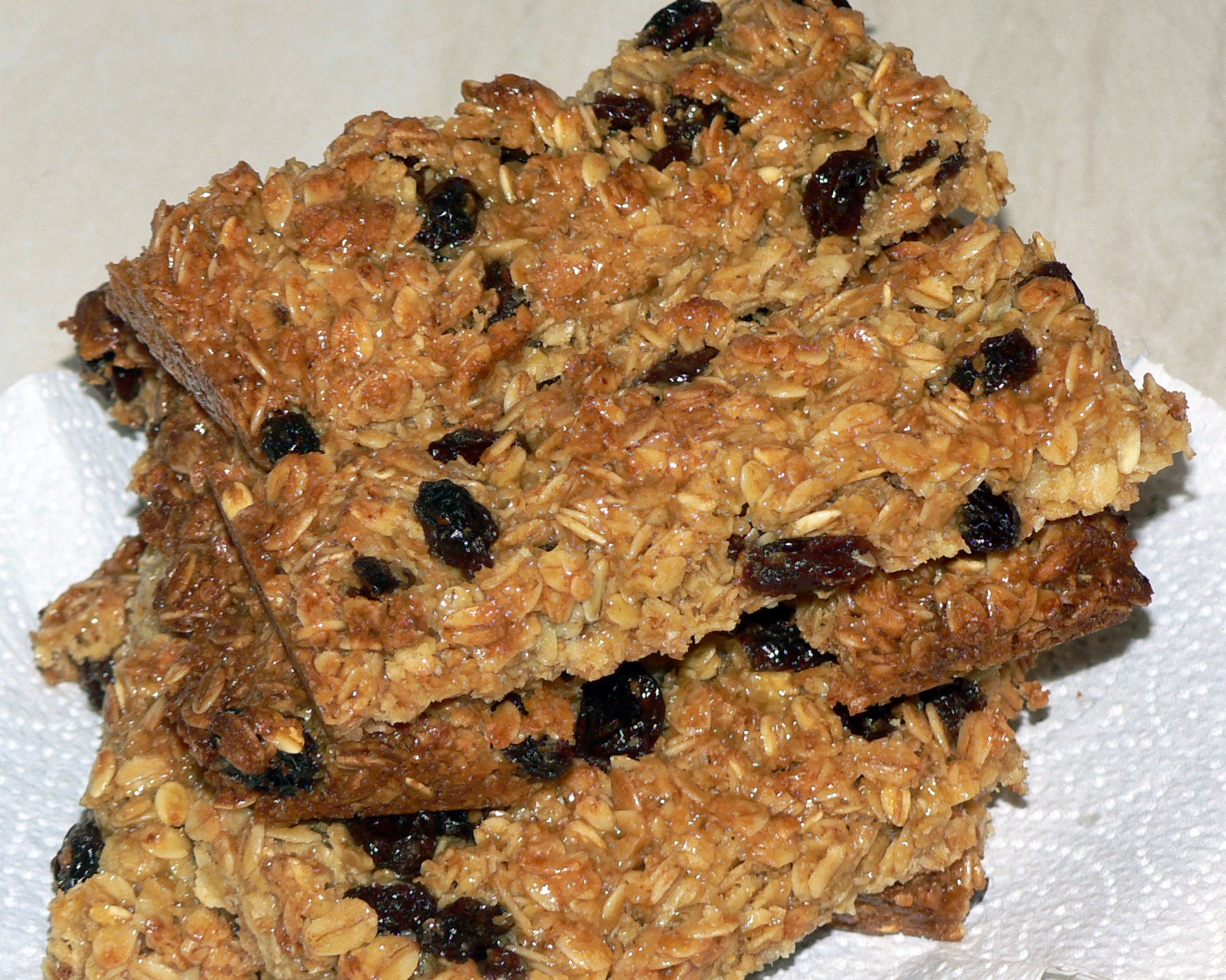
Store-bought granola bars are handy, but many schools ban peanuts and tree nuts, and plenty of bars either contain nuts or carry a “may contain” warning. These homemade bars use sunflower seed butter as the glue and pumpkin seeds for crunch, so there are no peanuts or tree nuts in the recipe.
The whole batch of 12 is sweetened with 1/3 cup (80 ml) of honey or maple syrup. That’s 16 teaspoons in all, or about 1 1/3 teaspoons per bar, plus any sugar in your seed butter and dried fruit. Oats, seeds and a pinch of cinnamon do the rest. It’s a good recipe to make together: kids can measure the oats, stir everything in one bowl and press the mixture into the pan.
They also freeze well, which makes them useful after the holidays when lunchboxes start up again in January, or as a snack for long car rides to see family.
Steps
- Heat the oven to 350°F (175°C). Line an 8 x 8 inch (20 x 20 cm) pan with parchment paper, leaving some hanging over two sides so you can lift the bars out later.
- In a large bowl, stir together the oats, cinnamon, salt, pumpkin seeds, raisins (or chocolate chips) and flaxseed, if using.
- In a small saucepan over low heat, or in a microwave-safe bowl in short bursts, warm the sunflower seed butter, honey or maple syrup and melted butter or coconut oil just until runny. Stir in the vanilla.
- Pour the warm mixture over the oat mixture and stir until every oat is coated. It will be thick and sticky.
- Scrape the mixture into the pan. Press it down very firmly and evenly with the back of a spatula or a flat-bottomed measuring cup. Pressing hard is what holds the bars together.
- Bake for 20 to 25 minutes, until the edges are golden brown. The middle will still feel soft.
- Let the pan cool on a rack for at least 1 hour, then refrigerate for 30 minutes before lifting out and cutting into 12 bars. Cutting while warm makes them crumble.
Tips
- Press, press, press. Crumbly bars usually weren’t packed down enough. A second sheet of parchment on top lets you press with your hands without sticking.
- Use a sharp knife, not a sawing motion. Press straight down, wiping the blade between cuts.
- Chewier or crispier. Take them out at 20 minutes for softer bars, or leave them closer to 25 minutes for firmer, crunchier edges.
- Freeze for lunches. Wrap bars one at a time in parchment or put them in a sealed container, separated by parchment, and freeze. Pack one frozen in the morning; it will thaw by snack time. In the fridge, they keep for about a week.
- Adapting another recipe? If you swap sunflower seed butter into a recipe that uses baking soda or baking powder, the bars may turn green as they cool. SunButter’s FAQ explains this is a reaction between a natural compound in sunflower seeds (chlorogenic acid) and the leavening, and suggests cutting the baking soda or powder by about one-third. This recipe has no leavening, so it shouldn’t happen here.
- Want less sugar? Swap half the raisins for unsweetened shredded coconut or more seeds. Dried cranberries are usually sweetened, so check the label if you use them. For more ideas, see our guide to healthy dessert swaps.
Good to know
- Still has added sugar. Honey and maple syrup count as added sugars. The CDC notes that the Dietary Guidelines for Americans recommend children younger than 11 don’t have any added sugar. These bars use much less than many recipes, but they’re still a treat-style snack, not a vegetable. Our guide to how much sugar kids should have explains the US and Canadian advice.
- No honey for babies. The CDC says not to feed honey to a child younger than 1 year old, because of the risk of infant botulism. Use maple syrup if a baby might get a piece.
- Choking risk for little ones. The CDC lists whole or chopped seeds and uncooked dried fruit such as raisins as choking hazards for young children. For toddlers, leave out the seeds and raisins, or skip these bars and offer something softer.
- Nut-free, but read every label. The recipe has no peanuts or tree nuts, but sunflower seed butter, oats, seeds, chocolate chips and dried fruit can be made in plants that also handle nuts. SunButter says it has never processed or allowed peanuts or tree nuts in its facilities; other brands differ, so check each package for “may contain” statements every time you buy.
- Other allergens. Sesame is a priority allergen in Canada and one of the nine major food allergens in the US. If your child avoids sesame, check seed butter and seed labels for it too. Butter is milk; use coconut oil for a dairy-free batch. Food rules vary from school to school, so check yours before packing these.
- Gluten-free. Oats don’t contain gluten, but Health Canada notes they are often grown, harvested and transported close to grains that do contain gluten, such as wheat, barley and rye. For a child with celiac disease, use oats labelled gluten-free. Celiac Canada says a small number of people with celiac disease don’t tolerate even pure oats, so check with your child’s doctor or dietitian.
Looking for more nut-free lunchbox ideas? Try our nut-free savoury snack mix, pumpkin oat muffins or sunflower butter chocolate cups, and see our roundup of healthy lunchbox snacks and lunchbox gear.
Sources
- Centers for Disease Control and Prevention: Get the facts: added sugars
- Centers for Disease Control and Prevention: Botulism prevention
- Centers for Disease Control and Prevention: Choking hazards
- Health Canada: Common food allergens
- U.S. Food and Drug Administration: Food allergies
- Health Canada: Gluten: a group of proteins that people with gluten-related disorders should avoid
- Celiac Canada: Oats for people with celiac disease
- SunButter: FAQs