
Holiday drinks for kids with less sugar: punch, cider and eggnog
We may earn a commission from links on this page, at no extra cost to you. As an Amazon Associate we earn from qualifying purchases. How this works
Our quick picks
| Pick | Best for | Where to buy |
|---|---|---|
| Glass drink dispenser with a spout | Best for a party water station | Amazon.caAmazon.com |
| Whole cinnamon sticks | Best for flavour without sugar | Amazon.caAmazon.com |
1. Glass drink dispenser with a spoutBest for a party water station
- What we like
- Puts plain or fruit-infused water where kids can see it and help themselves, which makes water the easy choice at a party.
- Watch out for
- Glass can break. Set it on a sturdy table away from the edge, and check that the spout doesn't leak before the party.
Fill it with water and sliced fruit, set out small cups, and let kids pour their own.
2. Whole cinnamon sticksBest for flavour without sugar
- What we like
- Add a warm holiday flavour to cider, milk or water without adding sugar.
- Watch out for
- Strain them out or keep them out of young children's cups. Whole spices aren't meant to be eaten.
A few sticks in a pot of warm cider or a pitcher of apple water go a long way.
Holiday parties come with a lot of drinks: punch bowls, hot cider, eggnog and hot chocolate. They feel festive, but they can add up to more sugar than the cookies. The good news is that most of them are easy to lighten, and a few simple safety checks keep them safe for kids.
This is general information, not medical advice. If your child has diabetes, a food allergy or another health condition, follow their doctor’s or dietitian’s plan.
Why drinks matter more than you’d think
Drinks are one of the biggest sources of sugar in kids’ diets. The CDC says the leading sources of added sugars in the US diet are sugar-sweetened beverages, desserts and sweet snacks, and that the Dietary Guidelines for Americans recommend children younger than 11 have no added sugar at all (CDC).
Canada’s Food Guide is just as clear. It recommends making water your drink of choice, and its list of sugary drinks includes fruit juice, fruit-flavoured drinks and punches, sweetened milks like chocolate milk, and hot chocolate and other specialty drinks (Canada’s Food Guide). It also names celebrations as one of the times to be most careful about what you drink. That’s exactly what holiday parties are.
For more on the numbers, see our guide to how much sugar kids should have.
How much juice is OK?
Many holiday drinks are built on juice: cranberry punch, apple cider, orange juice spritzers. Even 100% juice counts. The American Academy of Pediatrics (AAP) recommends these daily limits for fruit juice (HealthyChildren.org):
| Age | AAP daily juice limit |
|---|---|
| Under 1 year | No juice |
| 1 to 3 years | No more than 4 oz (about 120 ml) |
| 4 to 6 years | 4 to 6 oz (about 120 to 180 ml) |
| 7 to 18 years | 8 oz (1 cup, about 240 ml) |
The AAP also says kids should be encouraged to eat whole fruit, which has fibre that juice doesn’t, and that toddlers shouldn’t sip juice from bottles or sippy cups through the day because it exposes their teeth to sugar (HealthyChildren.org).
So a full cup of punch or cider at a party can be a whole day’s juice for a preschooler. The ideas below stretch the juice further.
Start with water (that looks like a party)
Water doesn’t have to be boring. Canada’s Food Guide suggests flavouring water with fruit and herbs, including these combinations (Canada’s Food Guide):
- blackberries and mint
- raspberries and cucumber
- strawberries and fresh basil
- chopped apples and a cinnamon stick
- pear slices and a drop of vanilla extract
The guide’s tip is to crush the berries, tear the herbs and cut the fruit into cubes so more flavour gets into the water. For the holidays, apple and cinnamon water fits right in. Fresh cranberries and orange slices also look festive in a clear pitcher (cranberries are very tart, so they’re more for colour than taste).
Kids can help make these. Washing berries, tearing mint and dropping fruit into the pitcher are good jobs for young helpers. Our holiday baking with kids by age guide has more ideas for kitchen jobs at each age.
A lighter party punch
Most party punch recipes mix juice with soda or ginger ale, so nearly all of the drink is sugar-sweetened. A simple way to lighten it:
- Use sparkling water instead of soda. Plain or unsweetened flavoured sparkling water gives the fizz without the sugar.
- Make juice the splash, not the base. One part 100% juice to three parts sparkling water still tastes fruity. At that ratio, a 1-cup (250 ml) serving has about 2 oz (60 ml) of juice. That’s our suggestion, not an official rule, but it keeps a cup well under the AAP’s daily juice limits above.
- Read juice labels. Choose bottles that say 100% juice. Juice “cocktails” and fruit drinks usually have sugar added on top of the juice.
- Add fruit for colour. Orange slices, pomegranate seeds, frozen berries or a few fresh cranberries make a plain bowl look like a party.
- Serve small cups. A 4 oz (125 ml) cup feels like a full drink to a small child.
For very young children, keep whole frozen berries and pomegranate seeds out of their cups, since small round foods can be a choking risk. Our nut-free holiday treats for school guide links to the AAP’s choking advice.
Hot spiced cider: check the label first
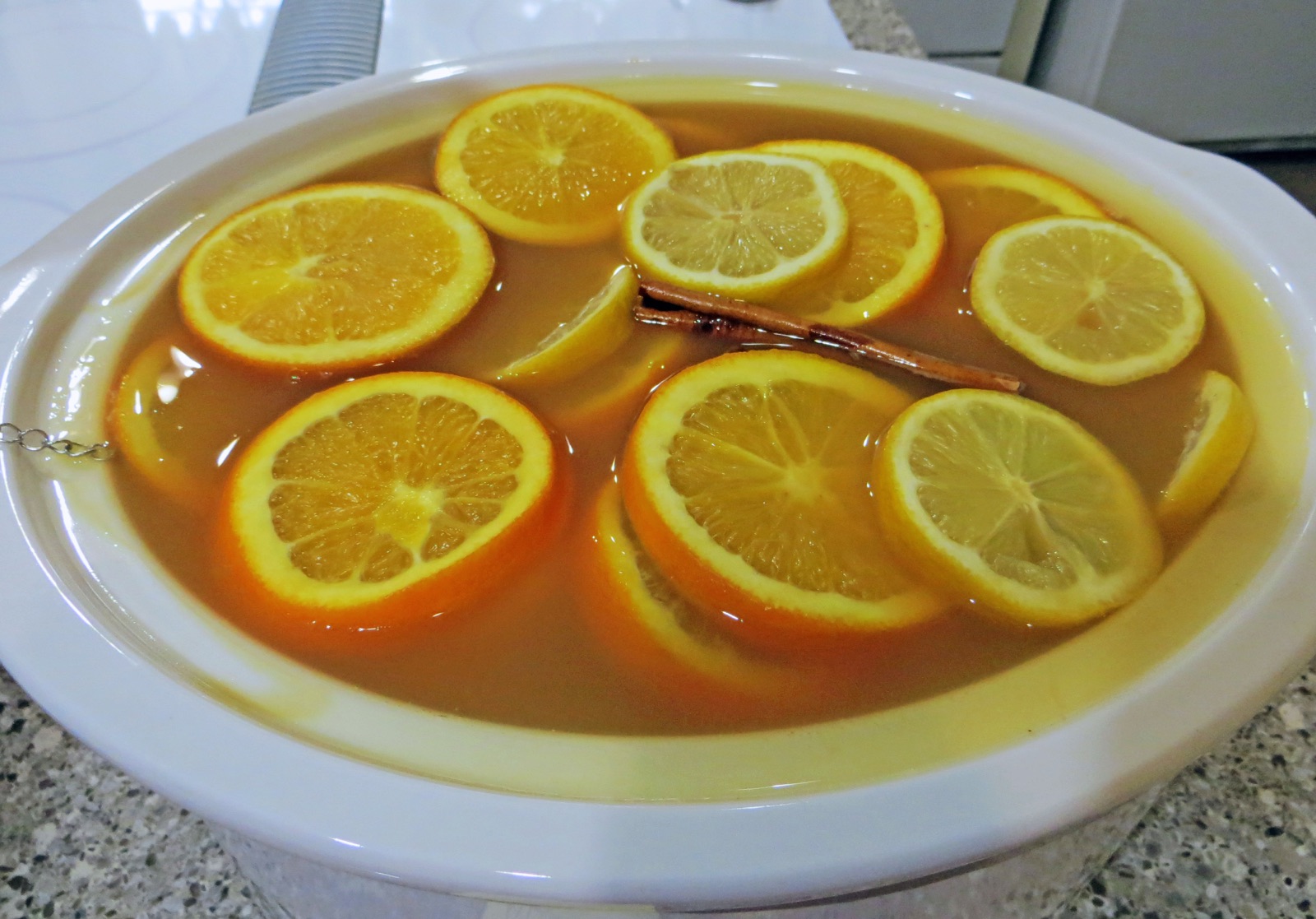
Warm cider with orange slices and cinnamon sticks smells like the holidays. Before you heat it, check whether it’s pasteurized.
In the US, the FDA says juice or cider that hasn’t been pasteurized or otherwise treated could be contaminated, and that outbreaks of foodborne illness have been traced to untreated juice and cider. Untreated juice sold in stores must carry a warning that it “has not been pasteurized and therefore may contain harmful bacteria that can cause serious illness in children, the elderly, and persons with weakened immune systems.” That warning isn’t required for juice sold by the glass, such as at orchards, farmers’ markets or juice bars (FDA). The AAP recommends that children of any age avoid unpasteurized juice (HealthyChildren.org).
So if you pick up fresh cider at a farm stand, ask whether it’s pasteurized. If it isn’t, it’s not a good choice for kids.
To make a lighter cider:
- Warm pasteurized apple cider or apple juice in a pot or slow cooker with orange slices and a couple of cinnamon sticks.
- Stretch it with hot water or a mild caffeine-free herbal or fruit tea. Half cider and half water still tastes like cider.
- Skip added sugar. Apple cider is already sweet.
- Let kids’ cups cool until just warm before handing them over, and keep the pot out of reach.
The cider counts as juice, so the AAP limits above apply.
Eggnog: cook it, or skip the raw eggs
Traditional homemade eggnog is made with raw eggs. Kansas State University Research and Extension notes that this carries a risk of Salmonella. It recommends cooking the egg base (eggs with part of the milk) gently to 160°F (71°C), then cooling it over ice water and chilling it completely, or using pasteurized eggs instead of raw ones. It also points out that alcohol is not enough to make raw-egg eggnog safe (K-State).
If you buy eggnog, check the label for pasteurized ingredients and the best-before date, and keep it in the fridge.
Eggnog is rich and sweet, and it contains milk and eggs, two of the nine major food allergens the FDA lists (FDA). Some ways to lighten it for kids:
- Mix it half and half with plain milk. It still tastes like eggnog with less sugar per cup.
- Make a “nog” steamer. Warm plain milk or an unsweetened fortified soy beverage with a pinch of nutmeg and cinnamon and a drop of vanilla. There are no eggs and no added sugar, and it smells like eggnog.
- Serve it in small cups and label it at parties so families with egg or milk allergies know to skip it.
Hot chocolate with less sugar
Hot chocolate is one of the drinks on Canada’s Food Guide’s sugary list, but it’s easy to make with less. Our homemade hot chocolate mix uses cocoa, a little sugar and a pinch of salt, so you decide how sweet each mug is. Add a cinnamon stick or a few maple marshmallows for a treat.
Tips for hosting
- Put water first. Set out a pitcher of fruit water before the punch bowl, at kids’ height, with cups beside it.
- Label every drink. A small card that says what’s in each drink (milk, eggs, juice, caffeine) helps parents of kids with allergies and helps kids choose.
- No juice for babies. The AAP recommends no juice at all before age 1.
- Keep hot drinks out of reach. Slow cookers and pots of cider are easy to bump at a busy party.
- Offer one special drink. One cup of punch or eggnog and then water is a simple rule that most kids accept at a party.
If you’re collecting food for a holiday drive, Food Banks Canada’s holiday list includes shelf-stable or powdered milk and milk alternatives. See our guide to healthier food bank donations and our food bank finder.
Sources
- American Academy of Pediatrics, HealthyChildren.org: AAP recommends no fruit juice for children under 1 year (2017)
- CDC: Added sugars (updated Apr 29, 2026)
- Health Canada, Canada’s Food Guide: Make water your drink of choice and Sugary drinks (2026)
- FDA: What you need to know about juice safety (content current as of Mar 5, 2024)
- FDA: Food allergies
- Kansas State University: Tips for safe eggnog (Karen Blakeslee, 2020)