Food allergies at holiday family gatherings: a plan for parents
We may earn a commission from links on this page, at no extra cost to you. As an Amazon Associate we earn from qualifying purchases. How this works
Our quick picks
| Pick | Best for | Where to buy |
|---|---|---|
| Tent cards for labelling dishes | Best for labelling a shared table | Amazon.caAmazon.com |
| Insulated casserole carrier | Best for bringing your own safe dish | Amazon.caAmazon.com |
1. Tent cards for labelling dishesBest for labelling a shared table
- What we like
- Children's Hospital of Philadelphia suggests marking dishes clearly with labels that name the allergen. A folded card next to each dish lets the cook write what's in it.
- Watch out for
- A label is only as good as the information on it. Ask the person who made the dish, and check the package of anything store-bought.
Simple blank cards make it easy for every cook at the gathering to write down their dish's ingredients, so nobody has to rely on memory.
2. Insulated casserole carrierBest for bringing your own safe dish
- What we like
- Bringing a dish you made yourself is one of the most common pieces of advice for allergy families at shared meals. A carrier keeps it warm and separate on the way.
- Watch out for
- Bring a dedicated serving spoon too, and keep the dish apart from the others on the table.
If your child can eat at least one main dish from home, the meal feels a lot less stressful for everyone.
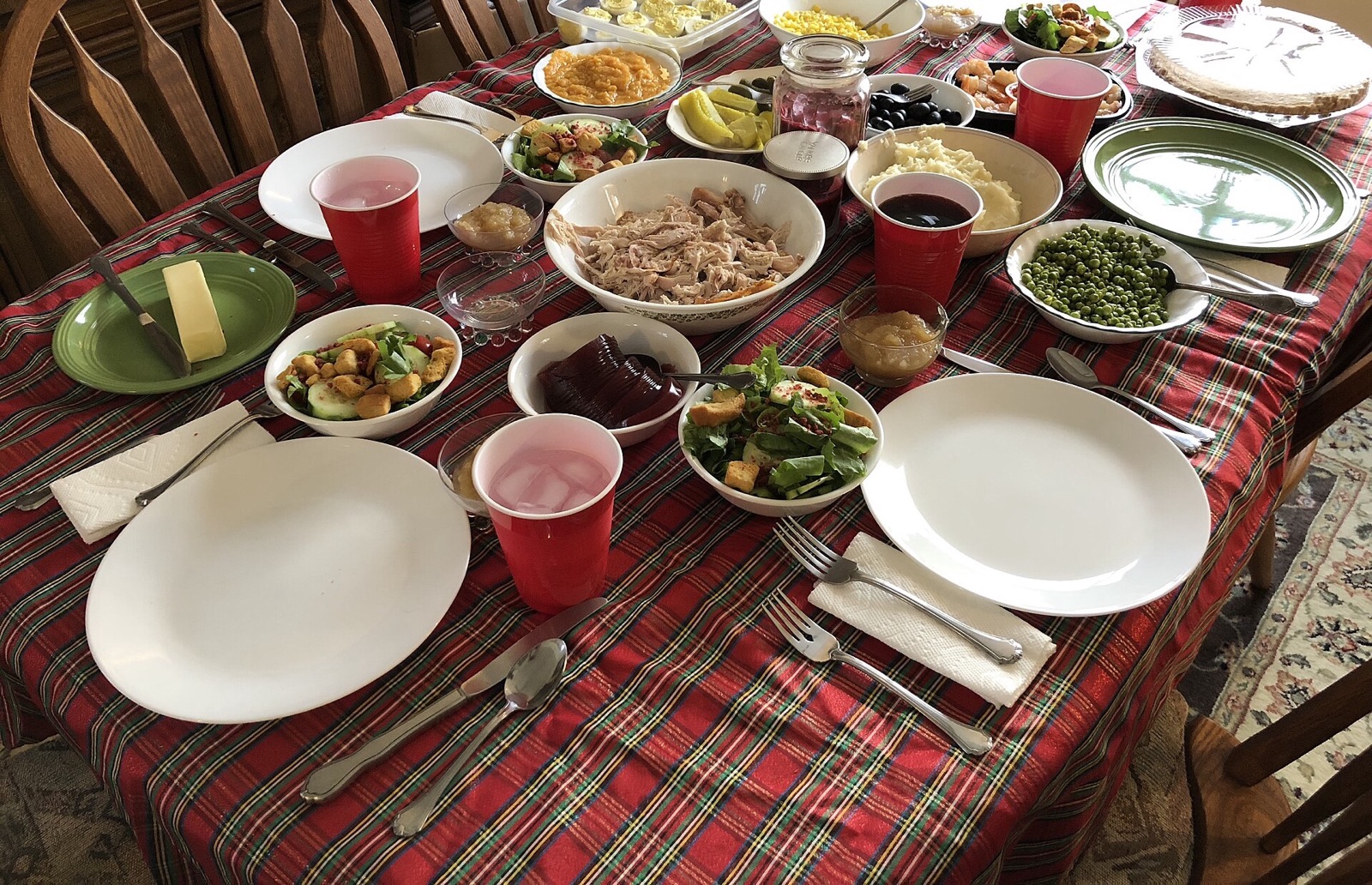
Holiday meals at a relative’s house are some of the best days of the year, and some of the hardest for families managing a food allergy. There are lots of dishes, many cooks, shared serving spoons, and well-meaning grandparents offering treats. With US Thanksgiving on November 26 and December holidays close behind, now is a good time to plan.
This guide pulls together advice from children’s hospitals, allergy groups and food regulators in the US and Canada. It’s general information, not medical advice. Your child’s allergist and their written emergency plan always come first.
Know which allergens you’re dealing with
In the US, the FDA lists nine major food allergens: milk, eggs, fish, crustacean shellfish, tree nuts, peanuts, wheat, soybeans and sesame (FDA). Health Canada’s list of priority food allergens has 11: eggs, milk, mustard, peanuts, crustaceans and molluscs, fish, sesame seeds, soy, sulphites, tree nuts, and wheat and triticale (Health Canada).
Holiday food hides many of these. Stuffing and gravy often contain wheat and milk, desserts may contain nuts, eggs and milk, and dressings and glazes can include mustard, sesame or soy. Ask about every dish, even ones that look plain.
Talk to the host early
Children’s Hospital of Philadelphia (CHOP) dietitians advise starting the conversation with the host as early as you can, because more time means more chance to plan a safe meal (CHOP). Their checklist for that conversation:
- Explain your child’s allergy, which foods trigger it, and how cross-contamination happens.
- Go over the menu together and see which dishes can be made safely.
- Offer to bring safe dishes or snacks, and share allergen-free recipes.
- Ask the host and anyone bringing food to save the labels, so you can read them.
- Ask for a food-free play area for the kids.
A CHOP allergist adds that if a dish can’t be made without the allergen, one compromise is to make two versions, one of them allergen-free (CHOP). It can also help to follow up a phone call with a short text or email that lists what you agreed, so nobody has to remember the details.
Bring food you know is safe
Hosting the meal yourself is the surest way to control what’s served. CHOP’s allergist notes that providing your own food greatly lowers the chance of exposure (CHOP). If you’re the guest, bring at least one dish your child can fill up on, plus a safe dessert.
CHOP also suggests feeding your child a safe meal or snack before you leave home (CHOP). A child who isn’t hungry is less tempted by the dessert table. If you’re hosting, you can ask guests to bring non-food items such as napkins, flowers or decorations instead of dishes.
Label every dish
On the day, CHOP recommends checking the menu, reading ingredient labels and marking dishes clearly with labels that name the allergen. If possible, keep safe and unsafe dishes in separate areas (CHOP). Their allergist puts it plainly: “you can’t rely on people’s memories” about which dish is which (CHOP).
For anything store-bought, read the whole label. Two things to know:
- In the US, each major allergen must be named at least once on the label, either in the ingredient list (for example “whey (milk)”) or in a “Contains” statement. “May contain” and “produced in a facility” warnings are voluntary, so a package without one isn’t a promise that there was no cross-contact (FDA).
- In Canada, the Canadian Food Inspection Agency says to read the label every time, including the “contains” and “may contain” statements. It suggests a triple check: when you buy, when you put groceries away, and before you serve. If you see a “may contain” statement for your child’s allergen, it advises leaving the product on the shelf (CFIA).
Our guide on how to read a candy label has more detail on ingredient lists.
Watch for cross-contact at the table
Family-style meals and buffets are where a lot of accidental exposures can happen. One serving spoon moved from the nut stuffing to the mashed potatoes is enough to carry the allergen across.
- One spoon per dish. CHOP suggests that every dish have its own serving spoon that stays in that dish (CHOP).
- Serve your child first, before other guests have had a chance to mix up the spoons.
- Picking the allergen off isn’t enough. CHOP’s allergist explains that removing visible allergens, such as sliced almonds on top of a dish, doesn’t make it safe. The dish needs to be made without the allergen from the start (CHOP).
- Wash hands with soap and water. FARE says plain water and hand sanitizer don’t reliably remove allergens, and recommends soap and water (FARE). That goes for guests who have been eating nuts before they pick up the baby, too.
- Clean shared surfaces and pans. FARE recommends soap and water or all-purpose cleaners, and warns that oils can seep through wax paper or other liners and cause cross-contact, so trays and baking sheets need cleaning after every use (FARE).
Prepare your child
Kids who are old enough can be part of the plan. CHOP suggests deciding together which foods are safe and which to skip, and practising how to say no to unsafe food (CHOP). FARE suggests coming up with phrases your child is comfortable using to politely turn down treats, and reminding kids that sweets shouldn’t be eaten until a trusted adult has read the label and said it’s OK (FARE).
Older kids can learn to read labels themselves and check for every name of their allergen; younger children should always ask an adult (CHOP). Little ones still need close supervision, because curious toddlers will reach for whatever is on a low coffee table.
Try not to make a big deal of your child eating different food. CHOP’s allergist says parents shouldn’t draw extra attention to it (CHOP).
Be ready for a reaction
The FDA says symptoms of a food allergy usually appear within a few minutes to a few hours after eating. They can include hives, swelling of the lips or face, vomiting, coughing or wheezing, dizziness and trouble breathing. A severe, life-threatening reaction is called anaphylaxis (FDA).
The American Academy of Pediatrics says that if epinephrine is available, it should be given right away for anaphylaxis, followed by a call to 911 and a trip to the emergency department. It also says children at risk should carry at least two doses, because a second may be needed (HealthyChildren.org).
Before the gathering:
- Pack your child’s medicines and their written emergency plan, and keep them with you rather than in a coat in another room.
- Show at least one other adult where the medicines are and what the plan says. If you can’t be there, CHOP suggests leaving your child with a trusted adult who knows the signs of a reaction and how to respond (CHOP).
- If you’re travelling, check that the medicines are in date and that you know where the nearest hospital is.
Make the day about more than food
The easiest way to include every child is to plan fun that has nothing to do with eating. CHOP suggests decorating, holiday games, books, movies and music (CHOP). A family walk, a card-making table or a gift exchange all work too. If the kids want to bake, choose a recipe where you control every ingredient. Our holiday baking with kids, age by age guide has ideas for jobs at every age, and our nut-free holiday treats for school parties guide has more allergy-aware treat ideas.
Sources
- Children’s Hospital of Philadelphia: Planning for holiday gatherings when your child has a food allergy (2018)
- Children’s Hospital of Philadelphia: Helping kids avoid food allergens at holiday gatherings (2021)
- US Food and Drug Administration: Food allergies
- Health Canada: Food allergies
- Canadian Food Inspection Agency: Have food allergies? Tips for reading food labels
- Food Allergy Research & Education (FARE): Cleaning methods
- Food Allergy Research & Education (FARE): Valentine’s Day in the classroom
- American Academy of Pediatrics, HealthyChildren.org: Anaphylaxis