
After Halloween: what to do with candy wrappers, costumes and pumpkins
We may earn a commission from links on this page, at no extra cost to you. As an Amazon Associate we earn from qualifying purchases. How this works
Our quick picks
| Pick | Best for | Where to buy |
|---|---|---|
| Clear storage bin with a lid | Best for a dress-up box | Amazon.caAmazon.com |
| Reusable canvas trick-or-treat bag | Best for next year | Amazon.caAmazon.com |
1. Clear storage bin with a lidBest for a dress-up box
- What we like
- Keeps costumes, wigs and accessories together and visible, so they can be reused for dress-up, school events or next Halloween.
- Watch out for
- Make sure everything is clean and completely dry before it goes in. Check the bin's measurements against your shelf or closet.
The simplest way to keep a costume in use: wash it, pack it with its accessories, and turn it into a year-round dress-up box.
2. Reusable canvas trick-or-treat bagBest for next year
- What we like
- Can be washed and used again each year, instead of buying a new plastic pail.
- Watch out for
- Pick a bag that isn't too big, so the haul stays manageable. Dark fabric is hard to see at night, so add reflective tape.
A small, reusable bag cuts one more single-use item from Halloween and helps keep the candy haul to a sensible size.
Halloween leaves a lot behind: a pile of wrappers, costumes that won’t fit next year, pumpkins that start to sag within days, and lights and decorations to pack away. Much of it can be reused or passed on. Some of it really does belong in the garbage, and putting it in the recycling bin can cause problems.
Every city and town runs its own waste program, so the details below are examples of what local programs say, not rules for where you live. Check your own city’s waste guide or app before you sort.
Start with the candy itself
Before thinking about wrappers, deal with the candy. Wrapped candy that won’t melt can go to kids who didn’t get any.
- Our candy drive collects wrapped candy from November 1 to 15.
- Many food banks take wrapped candy too, but each one sets its own rules, so call first. Our food bank finder covers the US and Canada.
- For more ideas, see what to do with leftover Halloween candy and where to donate it.
Keep donations wrapped. Unwrapped or opened candy can’t be shared, but in many areas it can go in the green bin or organics cart as food waste (more on that below).
Candy wrappers: usually garbage, sometimes a depot
Most candy wrappers are small, thin and made of mixed plastic and foil layers. Many curbside programs don’t take them:
- The City of Fort Collins, Colorado, says candy wrappers and other snack wrappers “should be thrown away in the trash” because they aren’t recyclable locally.
- The City of Santa Barbara, California, says film plastic such as candy wrappers goes in the trash because it isn’t recyclable in its blue bin.
Putting wrappers in the recycling bin “just in case” doesn’t help. If your program says garbage, they go in the garbage.
There are a few exceptions:
- British Columbia. Recycle BC counts candy wrappers as flexible plastic packaging. They don’t go in the curbside bin, but you can take them to a Recycle BC depot or a London Drugs store. The wrappers must be empty, and Recycle BC suggests collecting them in a larger bag until you have enough for a trip.
- Mail-back boxes. TerraCycle sells a Zero Waste Box for candy and snack wrappers, including plastic foil-lined wrappers. It’s a paid product, so it may make more sense for a school, office or group of families than for one household. It doesn’t accept paper-based wrappers.
- Boxes and paper. Some candy comes in small cardboard boxes or paper wrappers. Whether these go in recycling depends on your city, so check your local guide.
A simple family job for November 1: sort the haul into candy to keep, candy to donate, and wrappers and wrecks to throw away.
Costumes: reuse, pass on, then textile drop-off
Costumes don’t belong in the recycling bin. Hillsborough County, Florida, reminded residents on October 26 that shirts, pants, costumes and even bedsheet ghosts are not recyclable in its curbside program. It asks people to donate gently used costumes and put worn-out pieces in the trash. The City of Sugar Land, Texas, lists Halloween costumes in its separate textile recycling program but says “do not place textiles in your city issued recycle cart.”
Better options, roughly in order:
- Keep it for dress-up. Wash it, pack it with its accessories, and add it to a dress-up box for play, school events or next Halloween.
- Hand it down. Younger siblings, cousins, friends and neighbours are the easiest place to start.
- Swap. Some schools, libraries and community groups run costume swaps in the fall. If yours doesn’t, a simple swap rack at a school or Scout meeting next September is easy to set up.
- Donate. Thrift stores, school drama programs and local charities may take clean, complete costumes in good condition. Call first, since some only accept them close to Halloween.
- Textile drop-off. If a costume is too worn to wear, check whether your city has a textile recycling program or drop-off before throwing it away. Masks made of latex or hard plastic are a different material, so check your local rules for those.
Before a costume is worn again
When a costume comes out of storage next year, it’s worth a quick check against the American Academy of Pediatrics’ Halloween safety tips:
- Fit. Kids grow fast. Make sure the costume and shoes still fit, and that it’s short enough to prevent tripping.
- Flame resistance. Look for “flame resistant” on the label, including on wigs and accessories.
- Visibility. Bright colours, reflective tape and glow-in-the-dark details help kids be seen.
- Hats and masks. Hats shouldn’t slide over the eyes. The AAP suggests non-toxic makeup and hats as safer alternatives to masks.
- Accessories. Avoid sharp or long swords, canes or sticks.
- Makeup. Test it ahead of time on a small patch of skin.
Pumpkins: organics or yard waste, not recycling
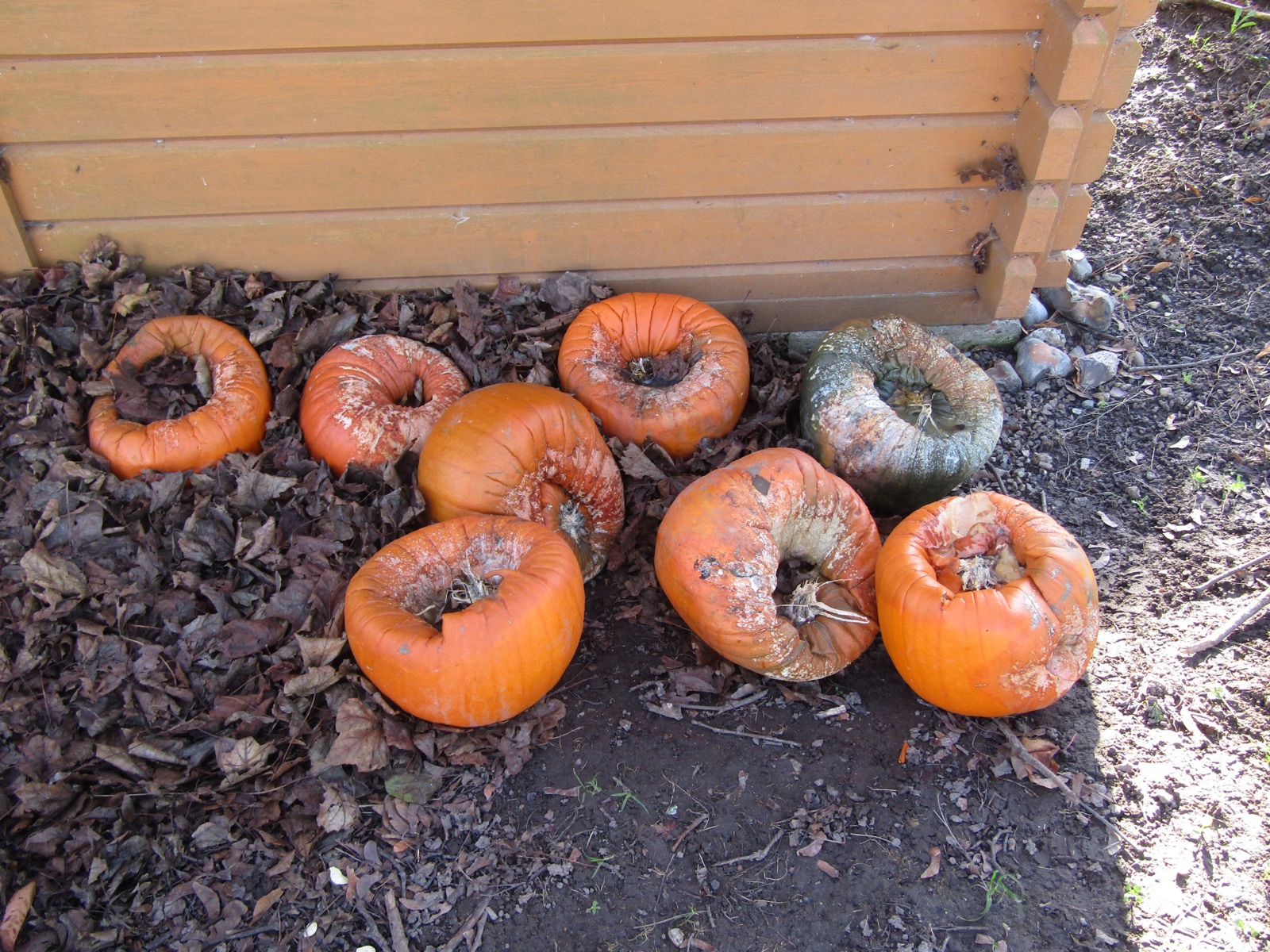
Carved pumpkins don’t last long, as the photo above, taken a few days after Halloween, shows. Pumpkins are food or yard waste, not recycling.
- Toronto lists pumpkins as accepted yard waste. The city also runs Pumpkin Parades in participating parks every year on November 1. It provides organics bins for clean-up, and the pumpkins are turned into compost for city parks and gardens. Check the city’s site for this year’s parks.
- Anmore, BC tells residents unwrapped candy and pumpkins go in the green cart, after removing any candles and decorations.
Wherever you live, take out candles, tea lights, glitter, paint and plastic decorations before a pumpkin goes in the organics bin. If your area has no organics or yard waste collection, check your city’s guide for drop-off sites.
Decorations: store, don’t toss, and keep “tanglers” out of the bin
Hillsborough County also flags a few Halloween items that cause real trouble in recycling:
- String lights and plug-in inflatables are “tanglers.” They wrap around sorting machines and can stop them, so keep them out of the recycling cart.
- Battery-powered decorations and small electronics need special handling because of fire risk. Take them to a household hazardous waste or electronics drop-off, not the recycling or garbage bin.
- Plastic bags, including thin costume packaging, tangle in equipment too. Reuse them, or take clean bags to a store drop-off if your area has one.
The best option for decorations is simply to pack them away for next year. A labelled bin, with the lights wound around a piece of cardboard, saves a shopping trip in October.
Plan a lighter Halloween next year
A few small changes now make next year easier:
- Make a costume box from this year’s costumes and old clothes, so next year starts with what you already have.
- Use a smaller, reusable bag for trick-or-treating, so less candy comes home.
- Offer a non-candy bowl at your own door. Our non-candy Halloween treats has ideas that work for kids with allergies too.
- Pick lower-sugar candy to hand out. See the best low-sugar Halloween candy.
And if you still end up with too much candy, our candy drive runs again every November.
Sources
- City of Fort Collins: Candy wrappers (recycling guide)
- City of Santa Barbara: Place candy wrappers in the trash
- Recycle BC: Coach’s guide to Halloween recyclable waste
- Village of Anmore: Treats, trash and sorting smart
- TerraCycle: Candy and snack wrappers Zero Waste Box
- Hillsborough County, Florida: Don’t let scary recycling habits haunt local bins this Halloween
- City of Sugar Land, Texas: Textile recycling
- City of Toronto: Yard waste and Pumpkin Parades
- American Academy of Pediatrics, HealthyChildren.org: Halloween safety tips